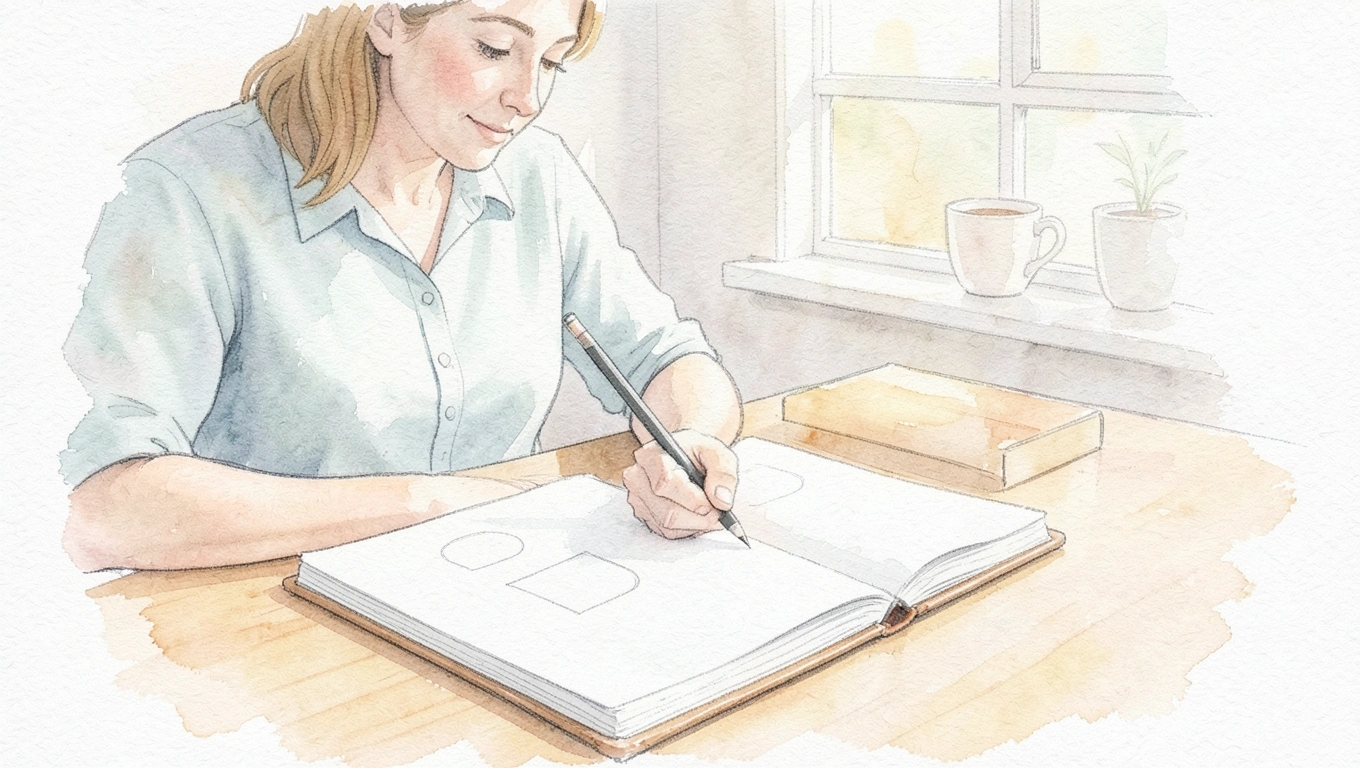
You sit at the kitchen table with a blank sheet of paper in front of you and a pencil in your hand. The page stays blank. Your mind fills with reasons why this won’t work: your lines will be wobbly, your proportions will be wrong, you never could draw in school. So the pencil stays still, and after a while you put it down and walk away. This scene plays out in homes everywhere, and it rests on a single false belief that drawing is a talent you either have or don’t. The truth is simpler and kinder: drawing is a skill you build through practice, and you can start right now with methods that work even when you’re convinced you can’t.
The fear of a bad drawing keeps more people from sketching than any real obstacle. But every artist you admire started with shaky lines and strange proportions. What separated them wasn’t magic ability. It was permission to begin badly and keep going anyway.
In this post
Why You Believe You Cannot Draw
The belief that you can’t draw usually starts early. Maybe a classmate drew a perfect horse in third grade while yours looked like a lopsided table. Maybe an adult said something careless about stick figures. Those moments stick, and they build a story in your head that drawing requires a gift you weren’t given. That story isn’t true, but it feels true, and feelings have weight.
What actually happens is that most people stop practicing around age ten or eleven. Their peers who “can draw” simply kept going. They made thousands of bad drawings you never saw. They learned to see shapes instead of things, to measure proportions with their eyes, to accept that a wonky sketch is still a step forward. Art instructors often emphasize that developing any creative practice is a matter of regular, forgiving repetition rather than sudden inspiration.
The other part of the problem is expectation. You compare your first attempt to finished work by practiced artists. That’s like watching a professional pianist and feeling bad that you can’t play Chopin after one lesson. The comparison is unfair, and it makes you quit before you’ve given yourself a real chance.
When you let go of the idea that your first drawings should look good, the pressure lifts. The goal isn’t to make something beautiful. The goal is to put marks on paper and notice what you see. That’s genuinely all you need to start.
Start With Shapes, Not Things
The single most helpful shift for beginners is to stop trying to draw things and start drawing shapes instead. When you look at a coffee mug and think “I’m drawing a mug”, your brain fills in what it thinks a mug should look like. When you look at the same mug and think “I’m drawing a cylinder and an oval and a curved handle”, you start seeing what’s actually in front of you.
Begin with the simplest forms: circles, squares, triangles. Draw them freehand, not with a ruler. Your circles will be lumpy. That’s fine. Draw twenty of them. Notice which direction your hand wants to move. Try drawing them slowly, then quickly. The goal is to get comfortable with the motion, not to make a perfect shape.
Once you’ve filled a page with basic shapes, start combining them. A cup is a cylinder with an ellipse on top. A house is a square with a triangle roof. A tree is a vertical line with a cloud shape on top. Breaking down complex subjects into these fundamental forms is how professional artists approach new subjects too. You’re not simplifying because you’re bad at drawing. You’re simplifying because that’s how drawing works.
Keep a small notebook and spend five minutes a day sketching shapes. Draw the objects around you as combinations of simple forms. The remote control is a rectangle with smaller rectangles on it. The lamp is a cone on a cylinder. This practice trains your eye to see structure, and structure is what makes a drawing feel solid and believable.
Accept That Bad Drawings Are Part of the Process
Every drawing you make will teach you something, even if it looks terrible. Especially if it looks terrible. The drawing that makes you cringe shows you exactly what you need to work on next. Maybe the proportions are off, so now you know to measure more carefully. Maybe the lines are shaky, so now you know to practice smoother strokes. Each mistake is information.
Professional artists throw away drawings all the time. They sketch, erase, start over. They fill sketchbooks with studies and experiments that never see the light of day. The difference between them and someone who’s given up isn’t that their first attempts are better. It’s that they don’t stop after a bad one.
When you finish a sketch that doesn’t look right, don’t tear it up. Set it aside and start another. Then another. After a week, go back and look at the first one. You’ll often find it’s better than you thought, or at least you’ll see what you learned from it. Progress in drawing is slow and uneven. You won’t notice it day to day, but over weeks and months the improvement is real.
Give yourself explicit permission to make ugly drawings. Say it out loud if you need to: “This drawing is allowed to be bad.” That small shift in expectation removes the main barrier between you and the page.
Use Simple Tools and Set Tiny Goals
You don’t need expensive supplies to start sketching. A regular pencil and printer paper are enough. Fancy materials can actually make starting harder because they raise the stakes. When you’re using a cheap notebook, it’s easier to fill pages with experiments and throw away what doesn’t work.
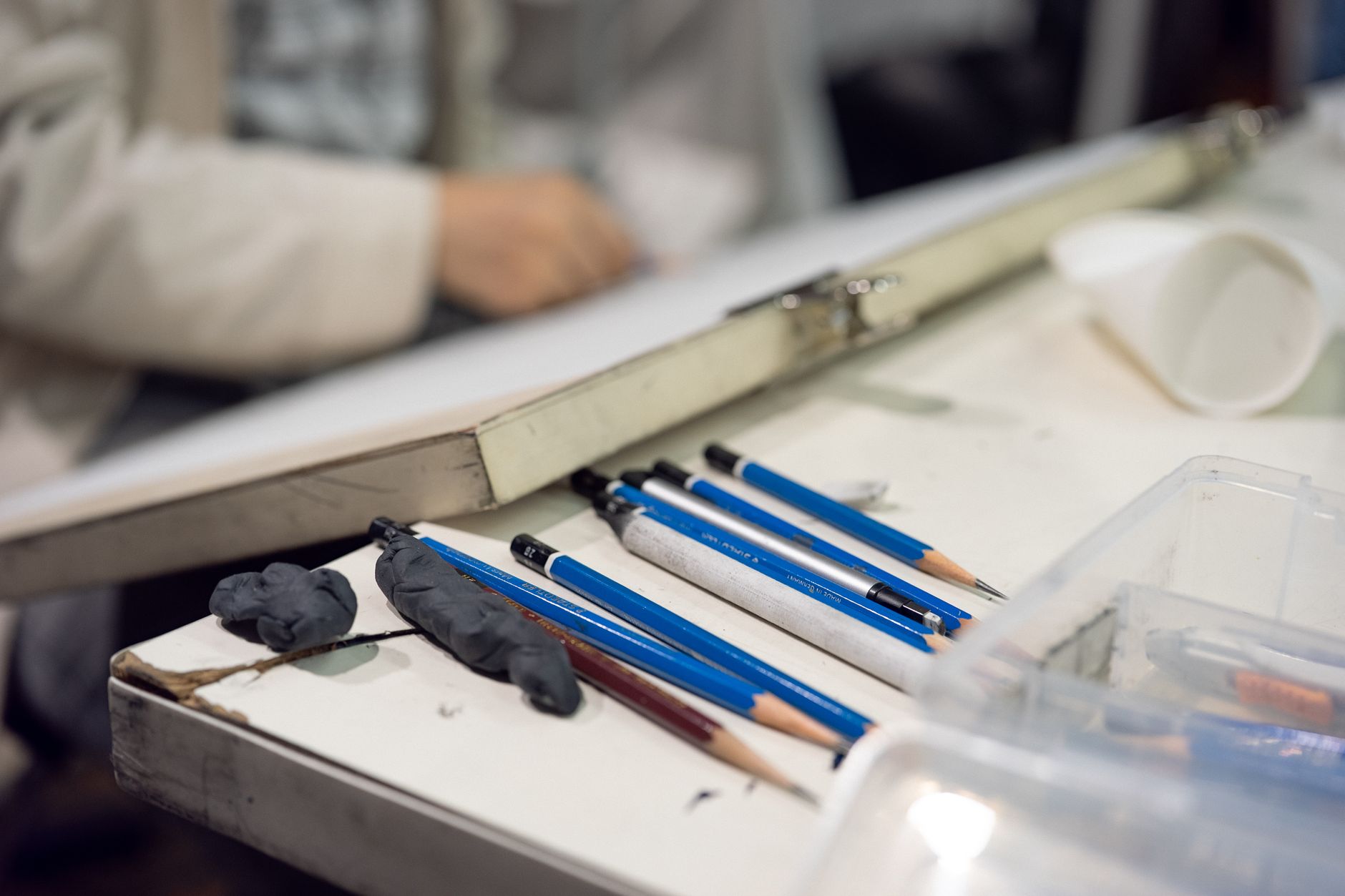
As you get more comfortable, you might try a few different pencil grades. A softer pencil makes darker marks and is good for shading. A harder pencil makes lighter, finer lines. But you can learn everything you need to learn with one standard pencil to begin with.
Set goals so small they feel almost silly. Draw for five minutes. Fill half a page with circles. Sketch one object from your desk. The tiny goal gets you started, and once you’re drawing you’ll often keep going. But even if you stop at five minutes, you’ve built the habit. That’s what matters early on.
Some people find guided resources helpful. Apps and online tutorials can offer structured lessons that break skills into small steps. The key is to keep the commitment light and the pressure low. You’re not training for an exhibition. You’re learning to see and to move your hand with intention.
Summary
The belief that you can’t draw is usually just a story built from old moments and unfair comparisons. Drawing is a skill that grows with practice, not a talent that appears fully formed. When you start by sketching simple shapes and treating mistakes as useful information, the work becomes manageable. Progress is slow, and that’s normal. What matters isn’t making a good drawing today. What matters is making any drawing today and then another one tomorrow.
You’ll have days when the page stays blank and days when every line feels wrong. Those days are part of learning too. The only way to fail at this is to stop trying. Keep the bar low, the tools simple, and the sessions short. Over time, your hand will learn what your eyes see, and the drawings will start to feel less like guesswork and more like communication.
If you’ve been waiting to feel ready, stop waiting. Pick up a pencil and draw a circle. Then draw another one. That’s the start, and it’s enough.
FAQs
Do I need natural talent to learn to draw?
No. Drawing is a skill you develop through practice, much like writing or playing an instrument. Some people may start with a slight advantage in hand control or visual observation, but anyone can learn to draw with consistent effort. What looks like talent is usually just accumulated practice you didn’t see.
How long does it take to get good at drawing?
That depends on what “good” means to you and how often you practice. If you sketch for a few minutes most days, you’ll notice real improvement within a few months. Becoming skilled enough to draw what you see accurately takes longer, often a year or more of regular practice. Progress is gradual, but it’s also steady if you keep going.
What should I draw when I’m just starting out?
Start with simple objects around your home. Draw a coffee cup, a book, a piece of fruit. Focus on everyday items with clear shapes. As you get more comfortable, try objects with more detail or sketch from photographs. The subject matters less than the act of observing and putting marks on paper.
Should I take a drawing class or learn on my own?
Both approaches work. A class gives you structure, feedback, and the accountability of showing up. Learning on your own gives you flexibility and lets you work at your own pace. Many people start alone and join a class later when they want guidance on specific skills. Try what fits your schedule and comfort level.
What if my drawings still look bad after weeks of practice?
Keep going. Progress in drawing is uneven, and what feels like no improvement is often your standards rising faster than your skills. Put your early sketches away for a month, then look at them again alongside recent work. You’ll almost always see the difference. If you’re still struggling, try focusing on one skill at a time, like drawing straight lines or simple shapes, rather than complete pictures.