
You open the fridge at 7:12 AM to find the milk carton empty, your child still hasn’t brushed her teeth, someone can’t find their math homework, and the school bus arrives in eight minutes. The kitchen feels like a pressure cooker, voices are rising, and you’re already exhausted before the day has properly begun. Morning chaos before school is one of those recurring domestic challenges that can set the tone for everyone’s entire day, and when it goes wrong, it really goes wrong.
The reality is that school mornings involve an uncomfortable number of moving parts in a very short window of time. Children need to wake up, get dressed, eat breakfast, brush teeth, pack bags, and somehow arrive at the bus stop or car line on time. Meanwhile, adults are trying to manage their own morning tasks while orchestrating all of this. It’s a lot, and it’s hard. But there are practical ways to reduce the friction, and most of them start the night before.
In this post
Build Your Morning the Night Before
The single most effective way to ease morning stress is to shift some of the preparation to the evening. When you’re racing against the clock at 7 AM, every decision and every task feels urgent. When you handle some of those same tasks at 8 PM, they’re just routine.

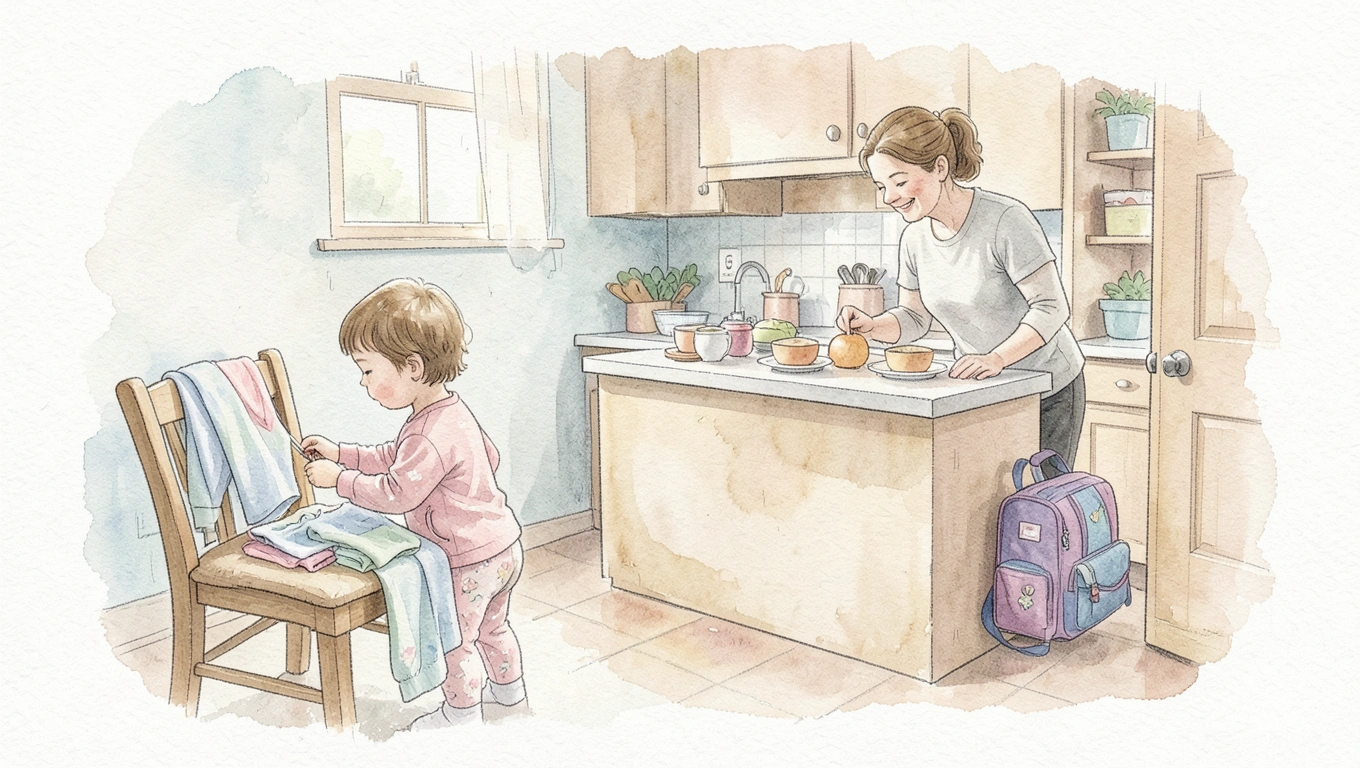
Laying out clothes the night before removes one major decision point from the morning. Let your child choose their outfit for the next day during a calm moment, check that it’s clean and weather-appropriate, and set it aside. This prevents the “I have nothing to wear” spiral when you’re already running late. The same principle applies to school bags. Pack them the evening before, with homework, library books, permission slips, and anything else that needs to go. Keep the bag by the door so it’s ready to grab.
Lunches are another area where advance work pays off. Preparing lunches the night before can significantly streamline your morning routine. If you prefer to make sandwiches fresh in the morning, at least gather all the ingredients and containers the night before so you’re not hunting for the lunch box or realizing you’re out of bread when time is tight. Some families batch-prep snacks or even full lunches on Sunday evening for the whole week, which removes the daily decision entirely.
The goal isn’t to eliminate all morning tasks, but to reduce the number of decisions and searches when everyone is still waking up and time is compressed.
Create a Predictable Routine
Children feel more secure and move through tasks more confidently when they know what comes next. A consistent sequence of morning activities helps everyone stay on track without constant reminders. The exact order matters less than the consistency.
One common sequence is: wake up, get dressed, eat breakfast, brush teeth, pack bag, put on shoes and coat. Another family might do breakfast first, then get dressed. What works depends on your household rhythm and your child’s temperament. Some children focus better on an empty stomach in the morning, others need food immediately. Pay attention to what actually happens in your house, not what you think should happen, and build the routine around that reality.
Once you’ve settled on a sequence, stick to it. Write it down if that helps. For younger children, a visual chart with pictures of each task can provide a clear roadmap they can follow independently. The predictability itself becomes a form of support. When Tuesday morning looks like Monday morning, children don’t have to ask what’s next or wait for instructions. They already know.
Encouraging independence is part of this. Allow children to take ownership of age-appropriate responsibilities, like choosing their outfit or packing their backpack. When a child knows they are responsible for getting their shoes on, and that this happens right after brushing teeth every single day, they’re more likely to do it without being asked. Independence grows with repetition and trust.
Make Space for Connection
When mornings feel like a race, it’s easy to slip into a purely transactional mode: eat this, put that on, hurry up, let’s go. But even brief moments of connection can shift the emotional temperature of the whole morning. A hug while you’re waiting for the toast to pop. A smile when your child comes downstairs. A quick conversation about what they’re looking forward to that day. These small interactions matter.
Connection doesn’t require extra time, it just requires attention. If you’re standing next to your child while they eat breakfast but you’re scrolling through your phone or mentally reviewing your work tasks, that’s proximity but not connection. If you sit down for two minutes, make eye contact, and ask one real question about their day, that’s different. Children pick up on whether you’re actually present, and it affects their mood and cooperation.
Some families build in a deliberate connection point, like everyone sitting together for breakfast even if it’s brief, or a goodbye ritual at the door. It doesn’t have to be elaborate. The point is to acknowledge that this is a person you care about, not just a small human who needs to be processed through a series of tasks before 8 AM. That acknowledgment, on both sides, makes the hard parts easier to manage.
Prioritize Breakfast Without the Stress
A nutritious breakfast supports your child’s energy, focus, and readiness to learn, but it doesn’t have to be complicated. The goal is a balanced meal that includes some protein, whole grains, and fruit or vegetables, not a Pinterest-worthy spread.
Quick and healthy breakfast options that work on busy mornings include overnight oats prepared the night before, smoothie bowls that come together in minutes, egg muffins you can bake in advance and reheat, yogurt parfaits with granola and berries, and whole-grain toast with avocado and a fried egg. These aren’t fancy, but they’re real food that will sustain a child through the morning.
If your child is a slow or picky eater, work with that reality instead of fighting it. Some children genuinely aren’t hungry first thing in the morning. If that’s the case, offer a small easy option at home and pack a more substantial snack they can eat mid-morning at school. Check with your school’s policies, but many allow this. The point is to get nutrition into your child in a way that actually works for them, not to force a battle over breakfast when everyone is already stressed.
Keep breakfast options simple and repetitive. Children often do better with predictability here too. If Tuesday is always yogurt parfait day and Thursday is always egg muffins, there’s no decision fatigue and no arguments about what’s being served.
Summary
Handling morning chaos before school comes down to reducing the number of decisions, tasks, and surprises that happen in a compressed time window when everyone is tired and rushed. Preparing the night before, building consistent routines, making space for connection, and keeping breakfast simple and nutritious are all practical strategies that genuinely help. None of them will make your mornings perfect, because mornings with children are inherently unpredictable, but they can make them more manageable.
What makes this hard is that it requires consistency and advance planning during the evening hours when you’re already tired from the day. It’s easier to collapse on the sofa than to pack tomorrow’s lunches. But the payoff is real. A calmer morning affects everyone’s mood, your child’s readiness to learn, and your own ability to start your day without feeling defeated.
If your mornings are currently chaotic, don’t try to overhaul everything at once. Pick one strategy, like laying out clothes the night before, and do that consistently for a week. Once it becomes automatic, add another piece. Small changes compound, and what feels impossible in week one often feels normal by week four.
FAQs
What time should I wake my child up for school?
This depends on how long your child’s morning routine actually takes and when they need to leave the house. Time the routine on a relaxed weekend morning to get a realistic baseline, then add a buffer for the reality that things take longer when you’re rushed. Most children need between 45 minutes to an hour and a half from waking up to walking out the door, depending on their age and independence level. Wake-up time should allow for this without requiring everyone to rush constantly.
How do I get my child to cooperate in the morning without constant nagging?
Consistent routines help because children learn to move through tasks without being told each time. Visual charts can support younger children. Natural consequences also work: if your child refuses to get dressed and you’ve given fair warning, they might need to finish getting dressed in the car or arrive at school in pajamas once. That consequence tends to solve the problem going forward. Stay calm, follow through, and resist the urge to rescue them from the outcome of their choices.
What if my child refuses to eat breakfast?
Some children aren’t hungry first thing in the morning, and forcing food creates a power struggle that makes mornings worse. Offer something simple and easy, but if they won’t eat, pack a substantial snack they can have at school once they’re awake and hungry. Talk to your child’s teacher about whether mid-morning snack time is allowed. The goal is nutrition over the course of the morning, not winning a breakfast battle at 7 AM.
How can I manage mornings when I have multiple children with different schedules?
Stagger wake-up times if possible, so you’re not trying to manage everyone at once. Older children can take on more responsibility for their own routine, which frees you to focus on younger ones who need more help. Prepare as much as possible the night before for all children. Color-coded systems for bags, lunch boxes, and clothing can help you keep track of whose is whose without adding mental load in the morning.
What should I do when we’re running genuinely late despite our best efforts?
Decide in advance what gets dropped when time runs out. Usually it’s better to skip a non-essential task than to create a stressful rush that affects everyone’s whole day. If you’re late, you’re late. Apologize to the teacher if needed, help your child sign in at the office, and let it go. One late arrival won’t derail their education, but starting every day in a state of panic will affect their well-being over time. Do your best, accept that some mornings will just be hard, and start fresh tomorrow.