It’s 11pm and you’re still awake, staring at the ceiling while your mind replays tomorrow’s to-do list on loop. You know you should be sleeping, but your body won’t cooperate. The frustrating thing? You’ve already tried the usual advice about buying special pillows or blackout curtains, and your budget is tapped. What if the solution doesn’t require spending a cent? The habits that make the biggest difference in sleep quality are often the simplest ones, things you can start tonight without opening your wallet. They ask for consistency rather than cash, and while that consistency takes effort, the return on investment for your mood, energy, and overall health makes it worth every ounce of discipline.
In this post
Set a Sleep Schedule and Stick to It
Your body runs on an internal clock that thrives on predictability. When you go to bed and wake up at different times each day, you’re essentially giving your brain mixed signals about when it should produce the hormones that make you sleepy and when it should wake you up alert.
Maintaining a consistent sleep schedule, even on weekends, helps regulate your circadian rhythm. This internal clock controls the release of melatonin and other sleep-related hormones, and when it knows what to expect, it performs its job more efficiently. You fall asleep faster, experience deeper rest, and wake up feeling more refreshed because your body has learned the pattern.

The hard part isn’t understanding this; it’s actually doing it. Weekends tempt you with the promise of sleeping in, and late-night social events throw off your routine. But the payoff shows up quickly. After just a few days of going to bed and waking at the same time, most people notice they feel drowsy at the right hour and wake before their alarm. Your body starts doing the work for you.
Pick a bedtime that gives you enough hours of sleep before your morning alarm, then protect it. Set a reminder an hour before bed to start winding down. Treat your wake time as non-negotiable, even on Saturday. The consistency signals your body to prepare for sleep at the right time, and that preparation happens automatically once the habit sets in.
Control Light Exposure Throughout Your Day
Darkness isn’t just about comfort; it’s a biological trigger. When your eyes register darkness, your brain interprets that as a signal to produce melatonin, the hormone that makes you feel sleepy and helps regulate your body’s natural day and night rhythm. Any light in your sleep environment interferes with that process.
Creating a dark bedroom matters more than most people realize. Studies show that exposure to even small amounts of ambient light during sleep can harm cardiovascular function and increase insulin resistance. That glow from your alarm clock, the streetlight seeping through your curtains, or the charging indicator on your phone can all disrupt your sleep quality without you noticing.
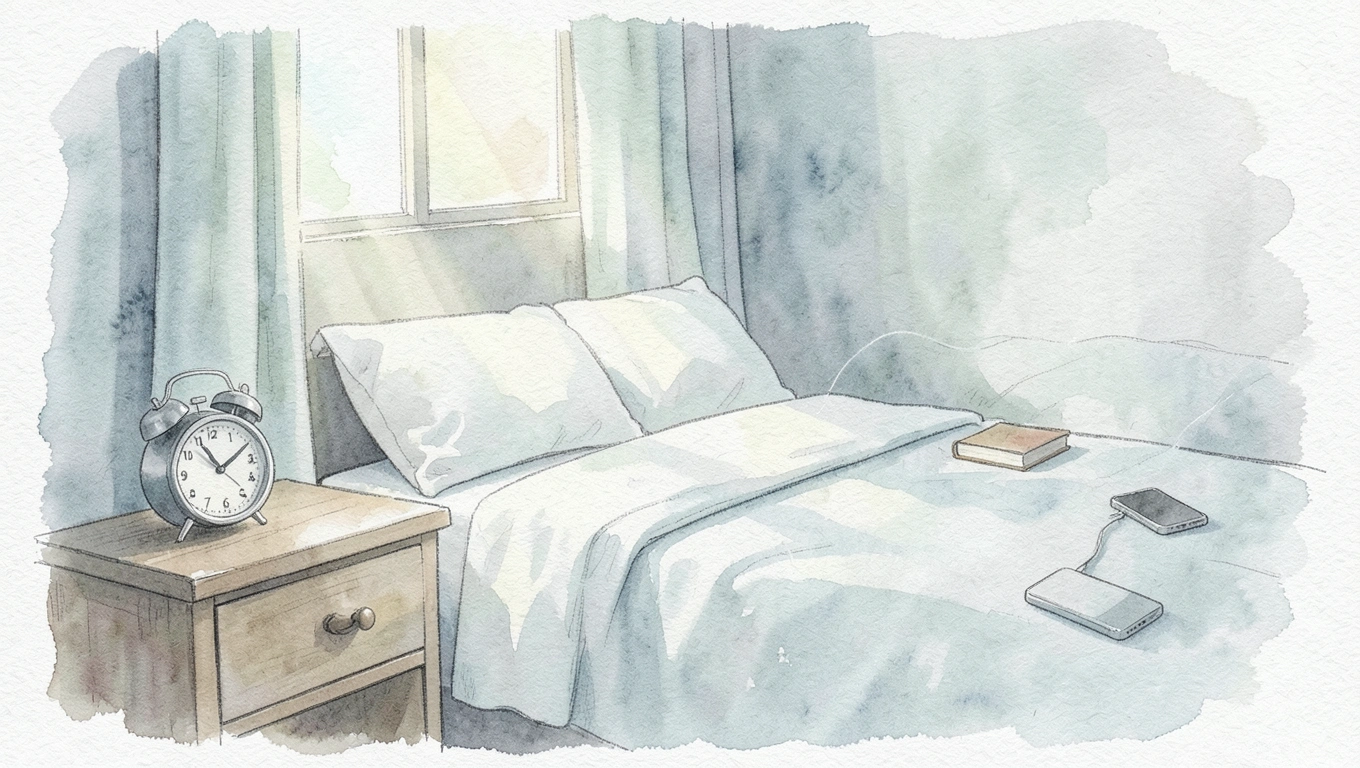
Start by eliminating obvious light sources. Turn your alarm clock to face the wall, cover small indicator lights with electrical tape, and make sure your curtains or blinds close completely. If light still sneeps in around the edges, hang a dark towel or blanket over the window. It won’t look magazine-ready, but it works.
The flip side of darkness at night is brightness during the day. Getting natural light exposure in the morning helps set your circadian rhythm. Open your blinds as soon as you wake up, eat breakfast near a window, or take a short walk outside. This contrast between daytime brightness and nighttime darkness teaches your body when to be alert and when to wind down.
Manage Temperature and Screen Time
Your body’s core temperature naturally drops as bedtime approaches, and a cool bedroom supports that process. The ideal temperature sits around 65°F (18°C), though individual comfort varies slightly. When your room is too warm, your body struggles to reach the lower temperature it needs for deep and REM sleep.
If you don’t have air conditioning, there are still ways to cool your space. Open windows to create cross-ventilation in the evening when outside air is cooler. Use a fan to circulate air. Take a warm shower before bed; as your body cools down afterward, it mimics the natural temperature drop that promotes sleep. Keep your sheets light and breathable.
Screen time presents a different but equally important challenge. The blue light from phones, tablets, and computers suppresses melatonin production, making it harder to fall asleep. Reducing screen time before bed, even by just 30 to 60 minutes, can improve sleep patterns.
This habit feels impossible at first if you’re used to scrolling through social media or watching videos until you’re drowsy. But those screens are actually keeping you awake longer than necessary. Try reading a physical book, listening to music, or doing a simple evening task like preparing tomorrow’s lunch. The key is finding something to fill that time that doesn’t involve a glowing rectangle inches from your face.
If you absolutely must use a device close to bedtime, enable night mode to reduce blue light and keep the screen dimmed. Better yet, set a specific time when all screens go off for the night and place your phone across the room rather than on your nightstand.
Use Mental and Physical Relaxation Techniques
Your mind and body need to transition from the busyness of the day into a state that allows sleep. When you’re stressed or tense, falling asleep becomes difficult because your body is still in alert mode. Practicing relaxation techniques signals to your nervous system that it’s safe to let go.
Progressive muscle relaxation works by systematically tensing and then releasing different muscle groups. Start with your toes, squeeze them tight for a few seconds, then release. Move to your calves, then thighs, working your way up through your body. This technique reduces physical tension and gives your mind something to focus on besides racing thoughts.
Writing can also quiet a busy mind. Keep a small notebook by your bed and spend five minutes before lights-out writing down things you enjoyed during the day or listing what you’re grateful for. This practice reduces stress and counters rumination, the repetitive negative thinking that often keeps people awake. When you acknowledge the good parts of your day, you shift your mental state away from worry.
Regular exercise throughout your day contributes to better sleep as well. Physical activity can be linked to longer total sleep duration and less nighttime waking. You don’t need a gym membership; a daily walk, home bodyweight exercises, or yard work all count. Just avoid vigorous exercise too close to bedtime, as it can be stimulating.
Mindfulness exercises like deep breathing or body scanning can also help. Lie in bed and focus on your breath, counting slowly to four as you inhale and to six as you exhale. When your mind wanders, gently bring it back to your breathing. This isn’t about emptying your mind completely; it’s about creating a calm, focused state that makes sleep easier to reach.
Summary
Better sleep doesn’t require expensive gadgets or supplements. The most effective improvements come from free habits that work with your body’s natural rhythms rather than against them. A consistent sleep schedule trains your circadian rhythm to produce sleep hormones at the right time. Controlling light exposure, keeping your bedroom cool, and limiting screens before bed all support your body’s biological need to wind down.
These habits take discipline, especially at first when old patterns pull you back toward irregular schedules and late-night scrolling. But consistent sleep can reduce stress, anxiety, and depression symptoms by stabilizing mood-regulating hormones and improving overall brain function. The benefits extend beyond just feeling less tired; you’re giving your body the foundation it needs to function well in every other area.
Start with one habit tonight. Pick the one that feels most doable, whether that’s setting a firm bedtime or putting your phone in another room. Once that becomes automatic, add another. Small changes compound over time into sleep that actually restores you.
FAQs
How long does it take to adjust to a consistent sleep schedule?
Most people notice improvements within a few days of maintaining the same sleep and wake times, though it can take a few weeks for the habit to feel completely natural. Your body adapts fairly quickly when given consistent signals, but the adjustment period varies depending on how irregular your schedule was before. Stick with it even if the first few days feel difficult.
Will napping during the day ruin my nighttime sleep?
Short naps earlier in the day generally won’t interfere with nighttime sleep and can actually help if you’re sleep-deprived. The key is keeping naps brief, around 20 to 30 minutes, and avoiding them late in the afternoon or evening. Long or late naps can make it harder to fall asleep at your regular bedtime because they reduce your body’s sleep drive.
What if my partner keeps different sleep hours than I do?
This takes compromise and communication. Use separate blankets so movement doesn’t disturb the other person. If one person goes to bed later, they can get ready for bed earlier and then do quiet activities outside the bedroom until their bedtime. Eye masks and earplugs can help the earlier sleeper if the other person needs to move around. The goal is respecting each other’s sleep needs while maintaining your own schedule.
Can I catch up on sleep during weekends?
Sleeping significantly longer on weekends disrupts your circadian rhythm and makes it harder to fall asleep Sunday night, creating a cycle of poor sleep during the week. While an extra hour of sleep on a weekend morning won’t derail everything, trying to “catch up” by sleeping several hours later keeps your body confused about when it should be producing sleep hormones. Consistent timing every day yields better results.
Should I stay in bed if I can’t fall asleep?
If you’ve been lying awake for more than 20 minutes, it’s usually better to get up and do a calm, non-stimulating activity in dim light until you feel drowsy again. Reading something boring, doing light stretches, or sitting quietly all work. This prevents you from associating your bed with frustration and wakefulness. When you feel sleepy, return to bed and try again.