A cluttered room drains you before you even start your day. You spend five minutes looking for keys, another ten hunting through piles for that bill, and the visual mess sits at the edge of your attention wherever you look. The good news is that you can clear one entire room in a single weekend if you approach it with a plan and stick to a sensible process. This guide covers the practical steps, from the tools you need to the sorting logic that keeps you moving, plus how to avoid the traps that turn a weekend project into a month-long slog.
The method here is straightforward. You pick one room, set a timer, sort everything into clear categories, and finish by getting the unwanted items out of the house before Monday. No magic, just a realistic pace and some basic discipline.
In this post
Set Up Your Workspace and Gather Supplies
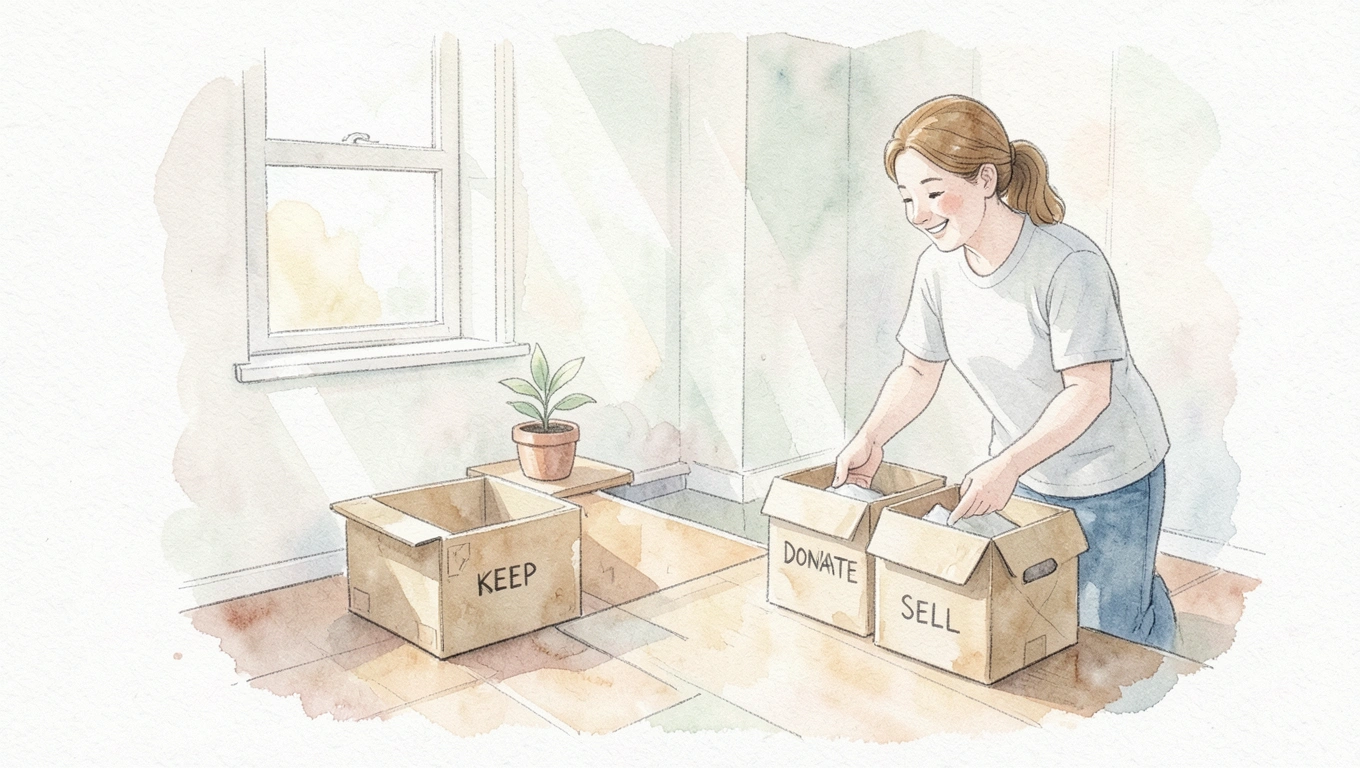
Before you touch a single item, prepare the space. You need four sorting zones, and each needs its own container. Use cardboard boxes, shopping bags, or laundry baskets, one for each category: keep, donate, sell, and throw away. Label them clearly with masking tape and a marker so you do not hesitate mid-sort.

Clear a patch of floor large enough to walk around comfortably. If the room is badly cluttered, move the sorting containers into the hallway or an adjacent room so they do not add to the visual chaos. Keep bin bags nearby for obvious rubbish, and have cleaning supplies ready for when surfaces emerge.
A timer is essential. Work in 45-minute blocks, then take a 10 or 15-minute break. This prevents the mental fatigue that makes you want to quit halfway through Saturday afternoon. Set the timer before you start sorting, not when you feel like it. The structure keeps you honest.
Have a notepad or your phone ready to jot down things you need to buy or fix. You will find broken drawer handles, dead batteries, and other small jobs as you go. Write them down and deal with them later, not during the declutter session. This setup takes 15 minutes and saves hours of dithering.
Work Through the Room in Zones
Do not try to sort the entire room at random. Divide it into zones: one shelf, one drawer, one corner at a time. Finish each zone completely before moving to the next. If you jump around, you will end up with half-sorted piles everywhere and no clear progress.
Start with a small, easy area to build momentum. A bathroom cabinet works well because items are usually obvious keepers or binners. A desk drawer full of tangled cables and dried-up pens is another good starter. You get quick wins, which matters when the room still looks overwhelming.
Pick up each item once. Decide immediately: keep, donate, sell, or bin. If you have not used it in the past year, it goes in the donate pile unless it is genuinely seasonal or a documented backup. The one-year rule is a practical baseline that cuts through most hesitation.
Sentimental items slow you down. When you hit a box of old letters or photos, move it aside and tackle it when you are fresh, not three hours into a declutter session. Fatigue makes you either throw away things you will regret or keep everything out of exhaustion. Save the emotional decisions for Sunday morning when your head is clear.
As each zone empties, clean it. Wipe down the shelf, vacuum the drawer, deal with the dust. Then put back only the items from the keep pile, organized logically. Do not refill a space just because it is empty. This zone-by-zone approach suits anyone who gets overwhelmed by big projects and needs visible progress to stay motivated.
Sort Quickly and Stick to the Rules
Speed matters more than perfection. You are making dozens of small decisions, and each one drains a bit of willpower. The longer you hold an item, the more likely you are to invent a reason to keep it. Touch it, decide, drop it in the right container, move on.
For the donate pile, ignore condition guilt. If it is clean and functional, it goes to charity. You do not need to find the perfect new home for every mug and paperback. Someone will use it or the charity will dispose of it responsibly. Your job is to get it out of your space.
The sell pile needs limits. Only put items in it if they are worth at least enough to justify the hassle of listing, photographing, and meeting a buyer. A worn jumper is not worth selling. A barely used kitchen gadget or a good coat might be. If the sell pile gets large, cap your time commitment. List the top ten items and donate the rest.
For the bin pile, be ruthless with anything broken, stained, or genuinely worn out. Do not donate rubbish. Charities spend time and money sorting through unusable items, and it clogs the system. If you would not give it to a friend, bin it.
Duplicates are easy calls. You do not need four can openers or six half-used notepads. Keep the best one and ditch the rest. The same applies to mystery cables, hotel toiletries, and single socks waiting for a partner that will never return. This method works for anyone who struggles with decision fatigue and needs a clear framework.
Finish the Job on Sunday
Saturday evening, you should have sorted everything and cleaned the room. Sunday is for removal and final organization. Load the donation bags into your car first thing. Drive them to a charity shop or donation point before lunch. Do not leave them in the hallway for a week, because they become clutter again and you will start pulling things back out.
List your sell items immediately or accept that they are going to charity too. Take the photos, write the descriptions, and post the ads on Sunday afternoon. If they do not sell within two weeks, donate them. Do not let the sell pile sit in a cupboard for months.
The bin bags go out with the next rubbish collection. If you have a large amount, book a bulk collection or take a carload to the tip. Get it gone.
Now put the keepers back properly. Group like with like: all the batteries together, all the notebooks in one spot, all the tools in a box. Use drawer dividers, small boxes, or jars to keep categories separate. Label shelves or containers if that helps you maintain the system.
Walk through the room one last time. Check under furniture, behind doors, and in any corners you might have skipped. Make sure nothing is left unsorted. This final pass takes ten minutes and prevents the nagging feeling that you missed something.
Summary
Decluttering one room in a weekend is entirely doable if you stick to a clear process and resist the urge to overthink. The key steps are simple: prepare your sorting zones and timer, work through the room in manageable sections, apply consistent rules to every item, and remove everything you are not keeping before the weekend ends. The structure keeps you moving, and the time limit forces realistic decisions instead of endless deliberation.
The hardest part is usually starting and then maintaining momentum when you hit a difficult zone or a pile of sentimental items. Work when you have energy, take breaks, and save the emotional decisions for when you are fresh. The end result is a functional space that does not drain your attention every time you walk into it, and the knowledge that you can replicate the process in other rooms when you are ready. A clear room genuinely does reduce stress and improve focus, which makes the weekend effort worth the discomfort.
FAQs
What if I run out of time before finishing the room?
Finish the zone you are working on, even if it means adding an hour on Sunday evening. Leaving half-sorted piles creates more mess than you started with. If you genuinely cannot finish, consolidate the unsorted items into one clearly marked box and schedule a specific day to finish it, ideally within the next week. Do not let it drift.
How do I decide what to keep when everything feels important?
Use the one-year rule as your baseline: if you have not used it in the past year and it is not seasonal or a documented backup, it goes. For items that pass that test, ask if you would buy it again today at full price. If the answer is no, donate it. The goal is not perfection, just a more functional space.
Should I declutter when other people share the room?
Only touch your own belongings unless you have clear agreement from the other person. Decluttering someone else’s things without permission causes resentment and undermines the project. If the shared room is chaotic, focus on your zones first and lead by example. Often people join in once they see progress.
What do I do with items I might need someday?
If you have genuinely used it in the past year or it serves a clear seasonal purpose, keep it. If it is a vague “might need”, donate it. You can usually borrow or buy the item again if the unlikely situation arises, and the cost of storage and mental clutter is higher than the small risk of needing to replace something cheap.
How do I stop the room getting cluttered again?
Adopt a one-in-one-out rule: when you bring something new into the room, remove something old. Spend five minutes at the end of each week returning items to their designated spots. The system only works if you maintain it, and a weekly reset is far easier than another full weekend declutter in six months.